
Disease Management for Pediatric Patients
Background
As part of our capstone project in Stanford’s Design Impact program, my team and I are exploring ways in which human-centered design can be used to help pediatric patients, their families and care providers to better manage their conditions. We are currently focusing on patients suffering from congenital heart defects at the Stanford Children’s Hospital.
Our Process
We are currently in the needfinding stage of our project, and aim to finalize our point of view (POV) by the end of this year, after which we would be testing and prototyping our service.
We have conducted interviews with over 30 pediatric care providers(doctors, nurses, family engagement specialists), parents of children suffering from chronic conditions, and congenital heart defect patients themselves. From our findings, we discovered that there are generally four major themes in the journey of a chronic pediatric patient and their caregiver.
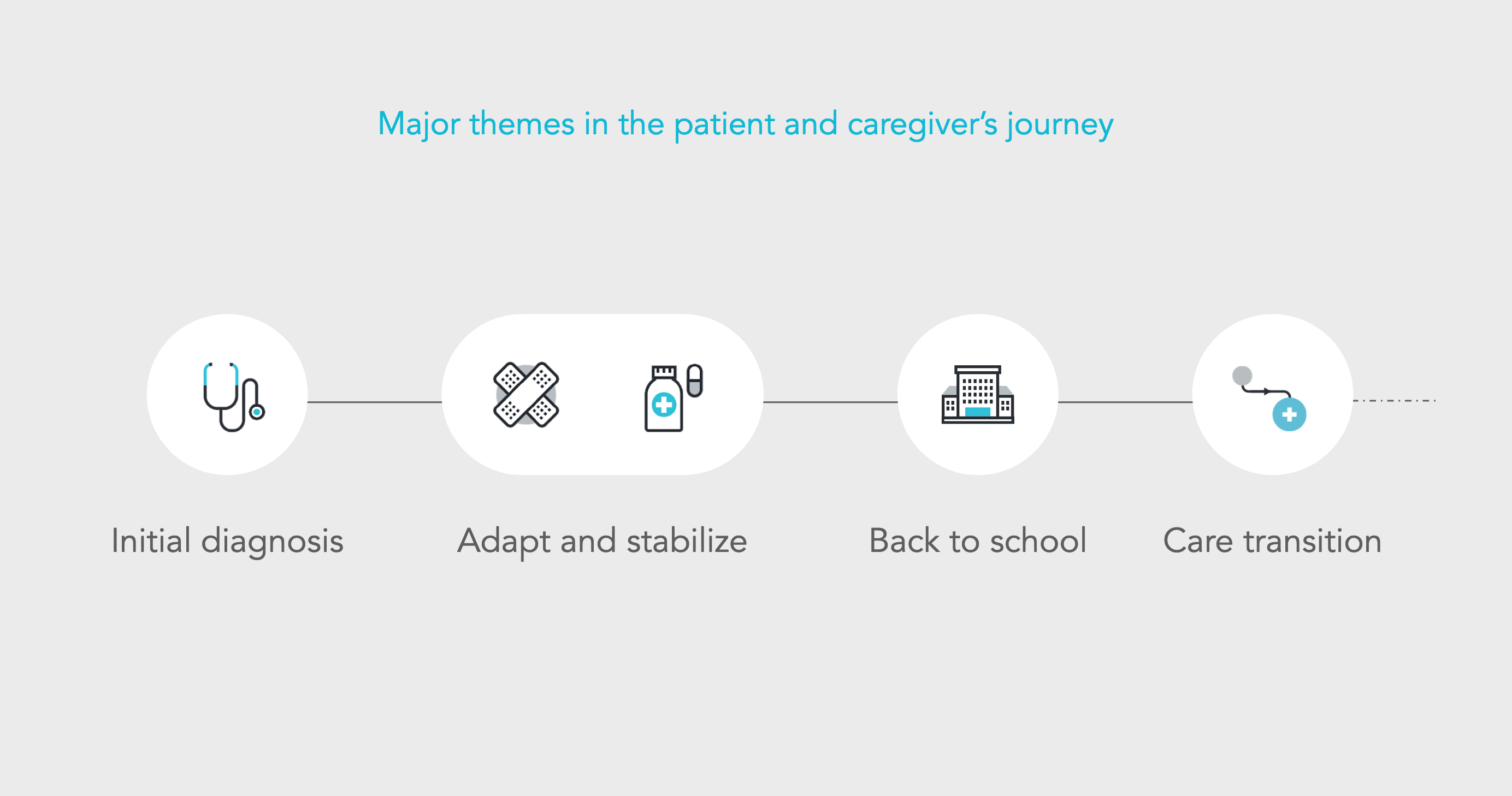
Out of these four main themes, we are focusing on care transition, which is a multi-year long process under which a patient gradually starts to take more control over the management of their disease, and which eventually culminates in the patient getting transferred to adult care. Through our user research, we realised that transition of care is a highly emotional idea for most caregivers, and there is massive friction between the caregivers and patients, which leads to general mismanagement of the patient’s condition and extra costs to an already overburdened and understaffed healthcare system.
The Major Reason for Conflict: Different Frames of Meaning
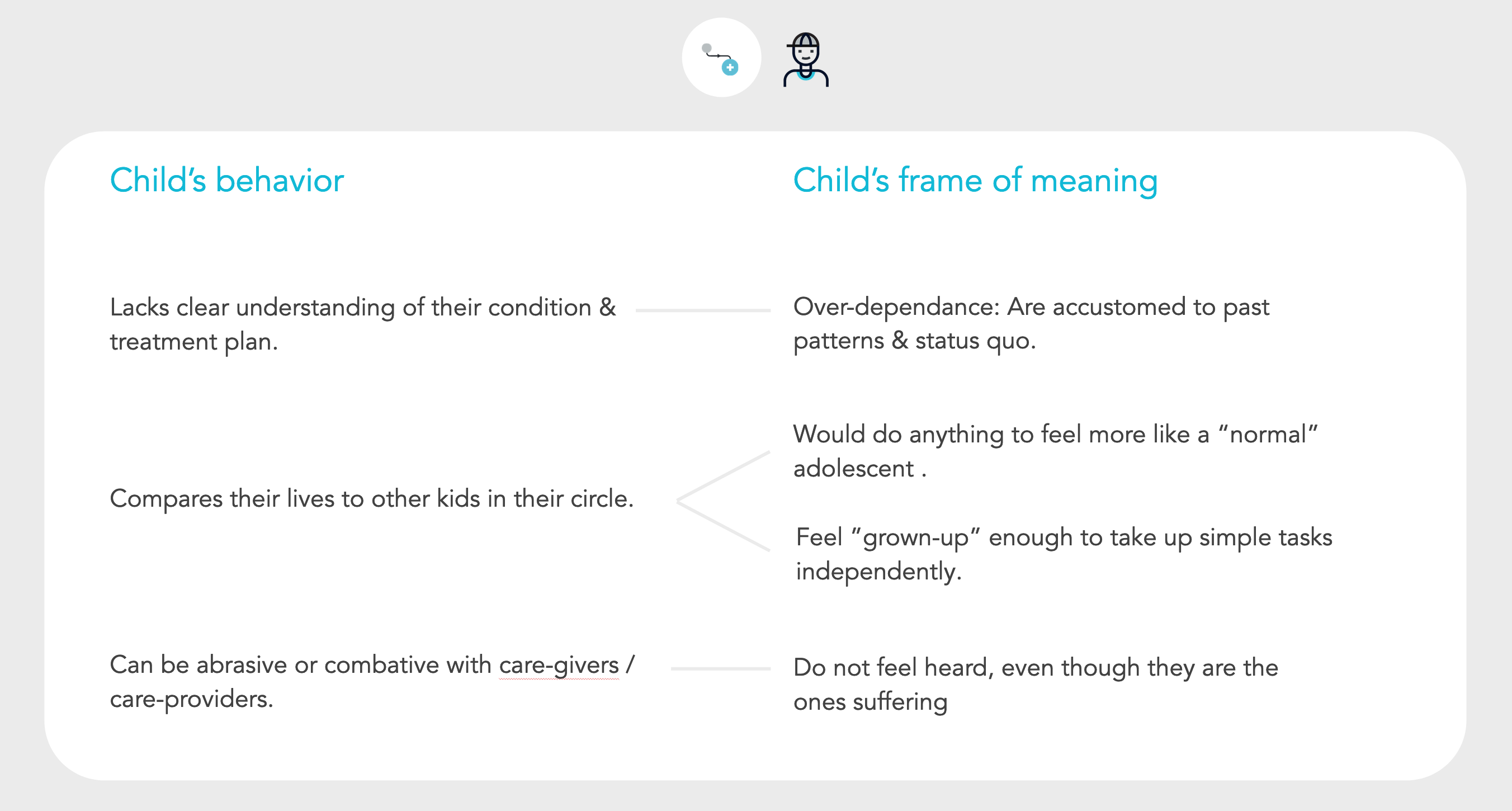
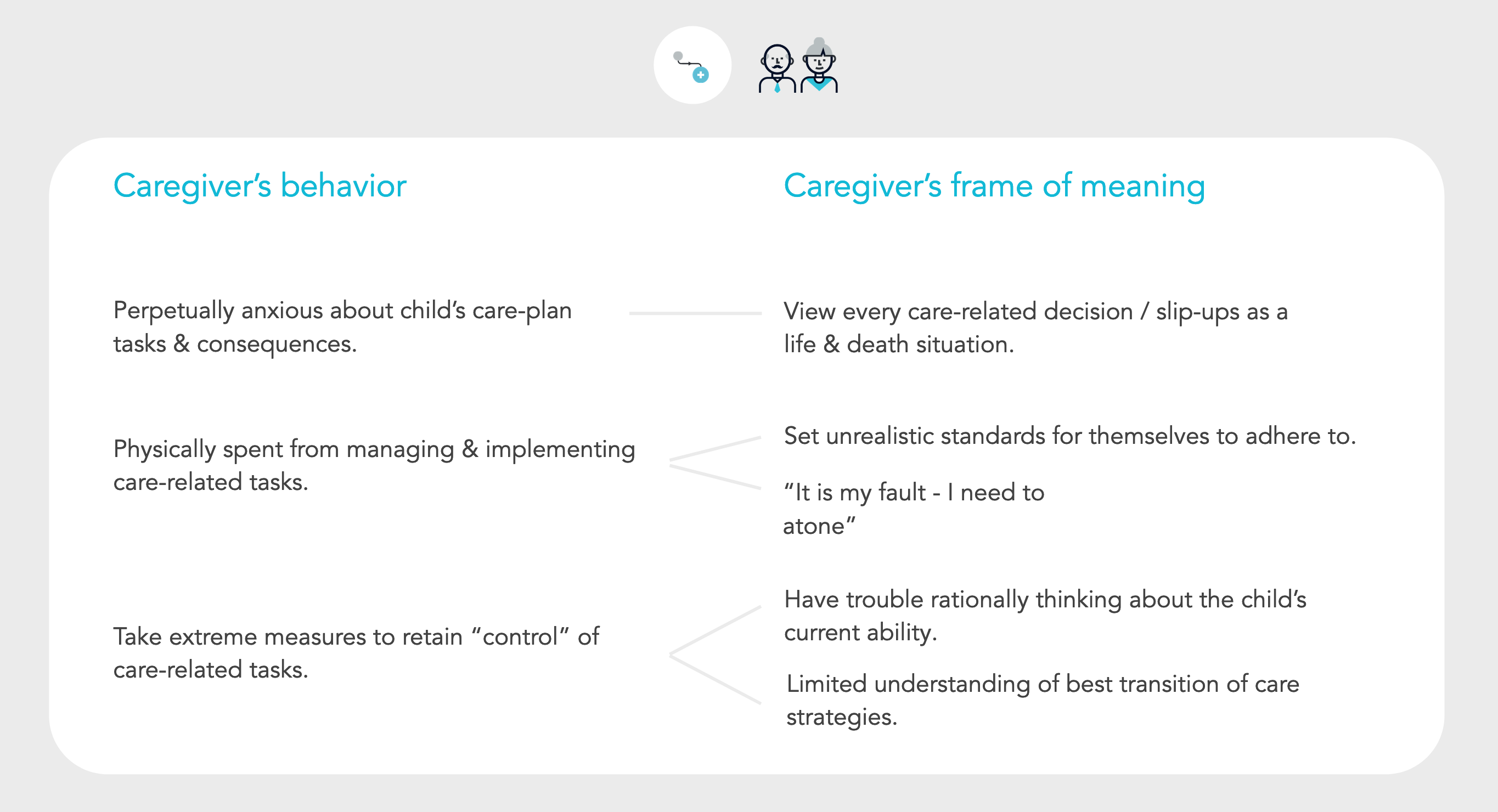
The single biggest reason for disagreement between patients and their immediate caregivers is the fact that both of them view the world from their own unique lens. Oftentimes, this leads to behaviour and expectations that are in stark contrast to each other, thereby resulting in conflict. The following diagrams highlight the different frames of meaning that patients and caregivers have.
Our POV
How might we help caregivers of chronically-ill adolescents smoothly transition control of disease management tasks to their kids , to instill a sense of normalcy & independence in their lives?
Next Steps
We are currently in the midst of testing out small displacement prototypes with caregivers and patient support groups to continue refining our POV.Concurrently, we are also interviewing patients and their caregivers to better understand the challenges that they face while transitioning care.